The author of the Bloom Safe Act marched alongside participants in Washington, D.C., and addressed the crowd as an official speaker, calling for sustained investment in prevention and respect for survivor voices.
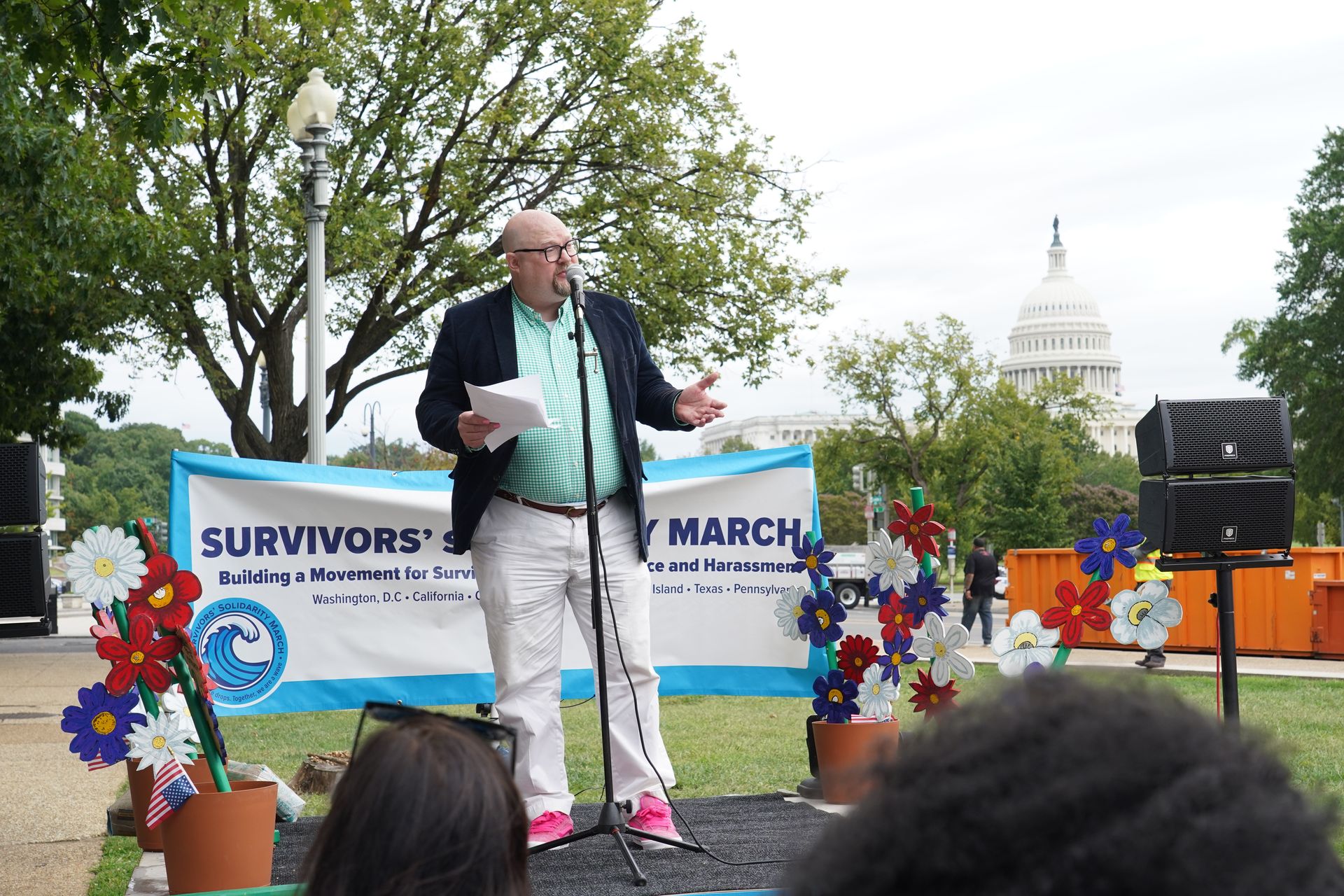 Steve Simons, author of Bloom Safe Act, speaks at Survivors Solidarity March, September 26, 2026. Photo credit: Leigh Vogel / Getty Images
Headline Image: Steve Simons, author of Bloom Safe Act, marches with Survivors Solidarity March, September 26, 2026, in Washington, D.C. Photo credit: Leigh Vogel / Getty Images
With the U.S. Capitol behind him, Steve Simons began his speech by asking the crowd to think about a child: getting ready for school, searching for a missing shoe, wondering who would sit beside them at lunch, and hoping someone remembered their birthday.
That child, he said, deserves to grow up with adults who understand their responsibility to protect them and have the tools and knowledge to do so effectively.
“Every child deserves to bloom safe.”
On Saturday, September 26, 2026, Simons, founder of Bloom Safe and author of the proposed Bloom Safe Act, joined the Survivors’ Solidarity March in Washington, D.C. He marched alongside fellow participants and served as one of the event’s official speakers, raising awareness for the Bloom Safe: Make America The Safest Place To Be A Kid Act and its approach to preventing child sexual abuse.
The march was part of a national day of action bringing together survivors of sexual violence and harassment, advocates, organizations, and allies. Its purpose included breaking isolation and creating connections to support, resources, and advocacy. Learn more about the movement.
Simons’s remarks connected that solidarity with a practical question: What will adults, communities, and policymakers do to make children safer?
Before discussing funding or policy, Simons spoke directly to those gathered.
“You do not owe anyone your story. You do not have to turn your pain into a speech. You do not have to prove your strength to deserve support.”
Whether someone had spoken publicly for years, confided in one trusted person, or never disclosed what happened, Simons affirmed that their value and dignity were the same. He also made clear that children bear no responsibility for the abuse they experience.
That principle carried into his explanation of prevention. Age-appropriate education can help children understand body safety, boundaries, and consent, and give them accurate language to communicate their experiences. The responsibility for protecting them remains with adults.
Simons described the need for teachers who know what to look for and how to respond, coaches who understand appropriate boundaries, and parents who can recognize grooming and find help. Organizations that serve children also need safety practices that guide what people actually do.
“And every institution should understand that protecting a child comes before protecting its own reputation.”
He extended that responsibility to digital environments and to the services survivors and families depend on after harm. Families need help understanding online risks, and support must be accessible, respectful of survivors’ choices, and responsive to trauma.
“A referral that leads nowhere, or a service a family cannot reach, is not enough,” he said.
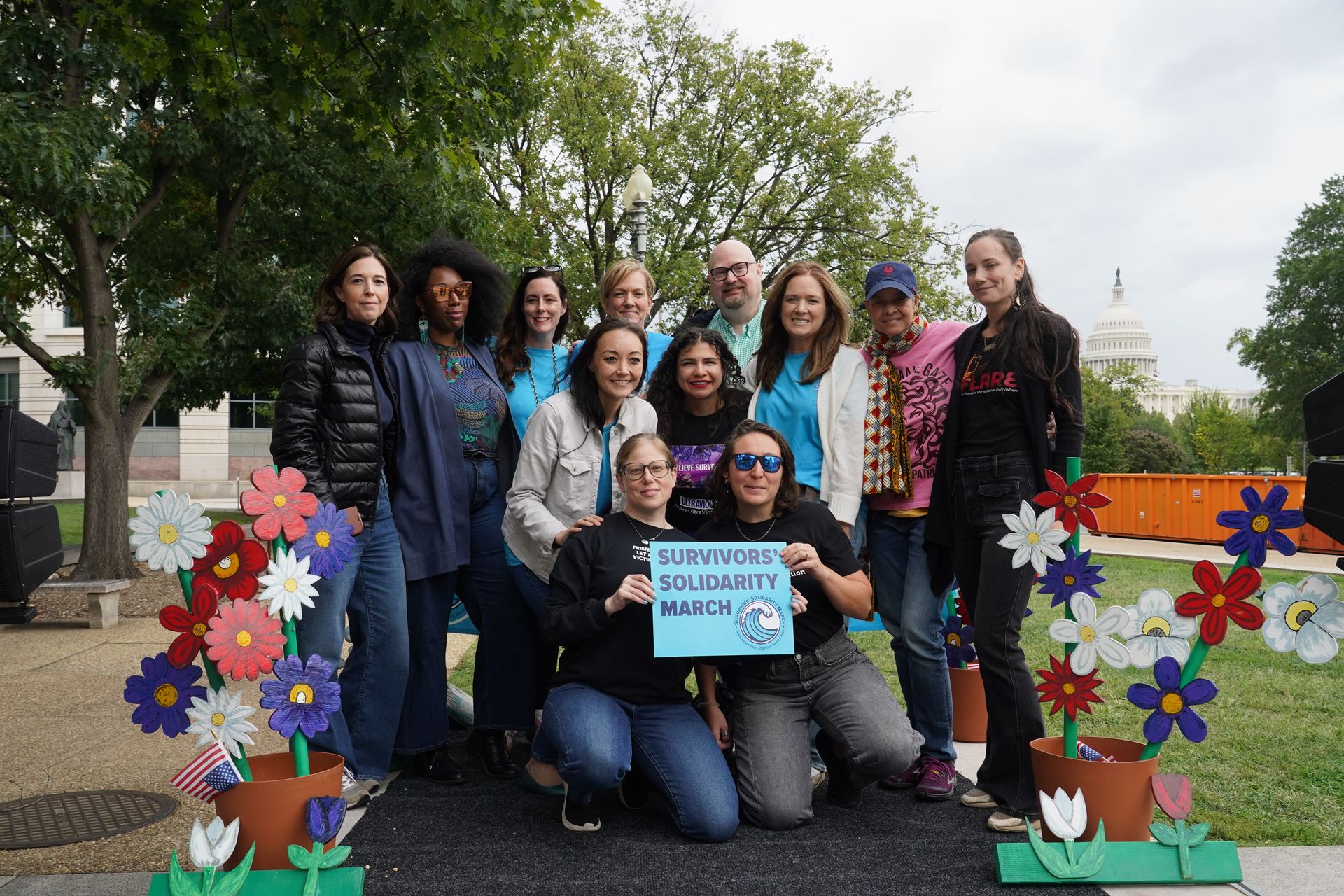 Steve Simons with the other speakers at Survivors Solidarity March, September 26, 2026. Photo credit: Leigh Vogel / Getty Images
In outlining the proposed Bloom Safe Act, Simons described a permanent national public-health commitment connecting federal leadership with community work. The proposal would invest $1 billion annually in prevention, research, education and training, community programs, national awareness campaigns, survivor and family support, and digital safety.
At least 60 percent of funding would go to eligible partners outside the federal government. Public reporting and independent review would provide accountability for spending and results.
Survivors would also have a formal role in shaping the work: at least one-quarter of the proposed advisory board would be adult survivors, with compensation for their participation.
Simons emphasized that contributing expertise must remain a choice. Every survivor deserves support, whether or not they become an advocate.
His appeal to lawmakers crossed party lines.
“A child’s need for safety does not depend on which party controls a committee. It does not change with an election.”
He asked public officials to review the proposed Bloom Safe Act and work with survivors, researchers, families, and prevention professionals to advance it. He also invited the crowd to carry the work beyond the march through three actions:
- Learn and share: Visit BloomSafe.org, learn about the proposal, and sign and share the Bloom Safe petition.
- Contact Congress: Ask your representative and senators to review the proposed Bloom Safe Act and consider sponsorship.
- Act locally: Ask schools, workplaces, congregations, and sports organizations how adults are trained, how concerns are handled, and whether child sexual abuse prevention policies are being practiced.
The speech closed by returning to the children whose daily lives depend on adults keeping them safe and to the survivors who deserved that protection themselves.
“You deserved it then. You deserve care and dignity now.”
For Bloom Safe, participation in the march brought survivor solidarity and prevention advocacy together in the nation’s capital. The work continues in families, institutions, communities, and the decisions that determine whether prevention receives sustained support.
As Simons reminded the crowd:
“Every child deserves to Bloom Safe. Let’s come together to make America the safest place to be a kid.”
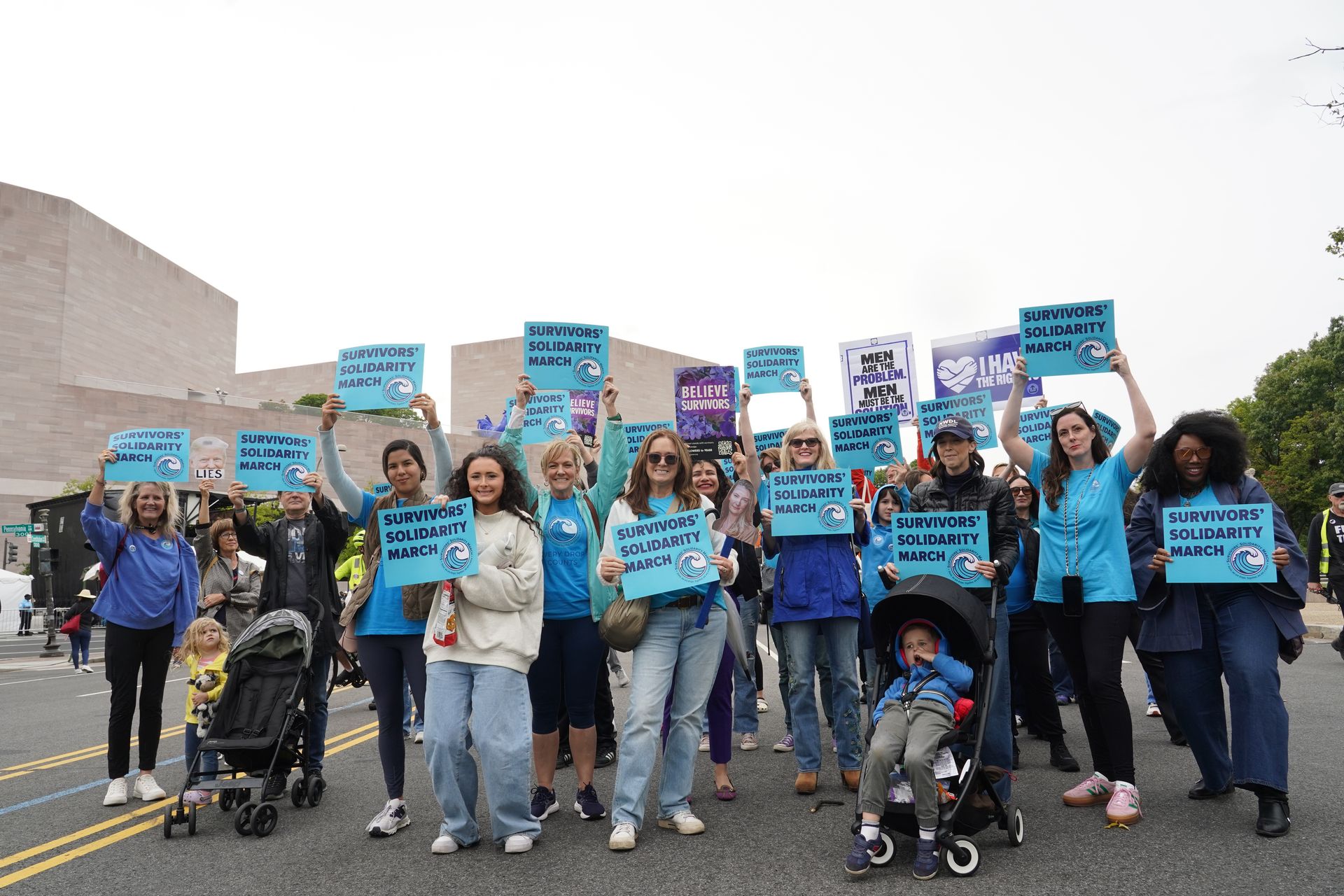 Survivors Solidarity March, September 26, 2026. Photo credit: Leigh Vogel / Getty Images